

A coastal authority grants permission for a marina, a hotel, a run of breakwaters. The reef sits a few hundred metres offshore, close enough that dredging, sediment plumes and altered wave patterns will reach it. Objectors write letters, speak at committee, lose. Months later a judge quashes the permission and the works stop. That reversal is rarely luck. It comes from a claim built on one narrow question: not whether the reef matters, but whether the decision-maker acted lawfully.
The details vary from case to case, but the anatomy of these challenges is remarkably consistent. What follows is that anatomy — the grounds, the evidence, the outcome.
Judicial review is not a re-run of the planning debate
Understand this early and you save money and heartache. A court hearing a judicial review does not ask whether the development is a good idea. It asks whether the decision was taken lawfully: within the powers granted, after proper procedures, taking account of what had to be considered, and reaching a conclusion that no reasonable decision-maker could have reached.
That distinction shapes everything. A judge will not swap an ecological judgement for the authority's. But a judge will intervene if the authority never engaged with the ecology in the first place.
The grounds that usually carry weight
In reef cases, the grounds that succeed cluster around the quality of the decision-making rather than the merits of the reef.
- Failure to consider a relevant matter. The committee report leaves out the marine survey, or reduces a serious finding to "minor impacts".
- Failure to apply the correct legal test. Environmental impact assessment duties, marine licensing conditions, obligations owed to protected sites, or the precautionary approach where the evidence is uncertain.
- A misleading report or inadequate reasons. If members were told one thing while the file said another, the decision rests on a false picture.
- Procedural unfairness. Objectors denied access to key material, or a late report the other side never saw.
- Errors of interpretation. Reading a coastal zone plan or a condition as permitting something it plainly does not.
One strong ground beats five weak ones. Courts are wary of being drawn into a wholesale attack on a decision, and a scattergun claim invites a robust response.
Evidence: the record, not the reef
Judicial review is decided largely on the material that was before the decision-maker. That sounds limiting, and it is — but it also tells you precisely what to gather.
The first task is to reconstruct the file: environmental information requests, correspondence, committee papers, officer notes, application documents, consultation responses, any screening or scoping opinion. Where a report was published late or never published at all, the gaps themselves become evidence.
Expert input still matters, but its role is diagnostic. A benthic ecologist or coastal engineer is most useful when explaining what the authority failed to weigh — that the sediment plume in the developer's own modelling reaches the reef, that the survey was carried out in the wrong season, that the proposed mitigation has failed at comparable sites. Evidence like that turns the claim from a disagreement about outcomes into a demonstrable gap in reasoning.
Two practical points. Witnesses with direct knowledge — dive operators, fishermen, long-standing residents — are valuable because they establish standing and give the court a reason to care. And keep the tone factual. A statement that reads like a campaign leaflet weakens an otherwise strong case.
Timing, procedure and who can bring a claim
Environmental challenges fail on timing more often than on substance. The windows are short, and they run from the date of the decision, not from the day you learn what damage it will do.
- Identify the correct route. Challenges to planning permissions in England and Wales often proceed by statutory review, with a six-week window; many other decisions go through judicial review, where the usual limit is three months. Scotland and Northern Ireland have their own procedures and court rules.
- Send a pre-action letter. It is expected, it can narrow the issues, and occasionally the authority concedes and agrees to quash without a hearing.
- Establish standing. You need a sufficient interest in the matter. A local group, a charity or an individual with a genuine connection can usually show it.
- Expect a permission stage. Most claims are filtered here, decided on the papers and sometimes at a short oral hearing.
- Plan for costs. Losing normally means paying the other side's costs. Environmental cases may attract cost caps and protective costs orders exist, but neither is automatic. Take advice before filing.
The outcome: what a quashing order does, and does not, do
A successful challenge ends in a quashing order. The permission is treated as though it never existed, and the matter usually returns to the authority to be decided properly.
Be clear about the limits. The court does not grant or refuse the development. If the authority revisits the application, weighs the reef evidence and grants permission again with adequate reasons, that may well be lawful, and the challenge is spent. Relief is also discretionary: a court can identify an error and still decline to quash where the outcome would plainly have been the same, or where delay and prejudice make it unjust.
There is a wider effect too. A judgment setting out what the authority failed to do becomes a working checklist for every similar application on that coast — and for the next campaign.
If a reef near you is under threat
Start by fixing the decision in your sights. Write down the date, the decision-maker, the legal power relied on and the documents behind it. Request the file in writing under environmental information rules and diarise every deadline. Build your case around the strongest single legal flaw rather than the general undesirability of the scheme, keep your witness evidence calm and specific, and involve a public law solicitor before the clock runs down. These are tight, technical claims, and the cost of a wrong step is real.
Judicial review is a narrow tool. Used well, it does one thing exceptionally: it forces a decision-maker to look at the reef it had been treating as an inconvenience.
This is general information about how such challenges work, not legal advice. Court rules, time limits and costs protection vary by jurisdiction and change over time. Take advice from a solicitor experienced in public law and environmental claims before acting.
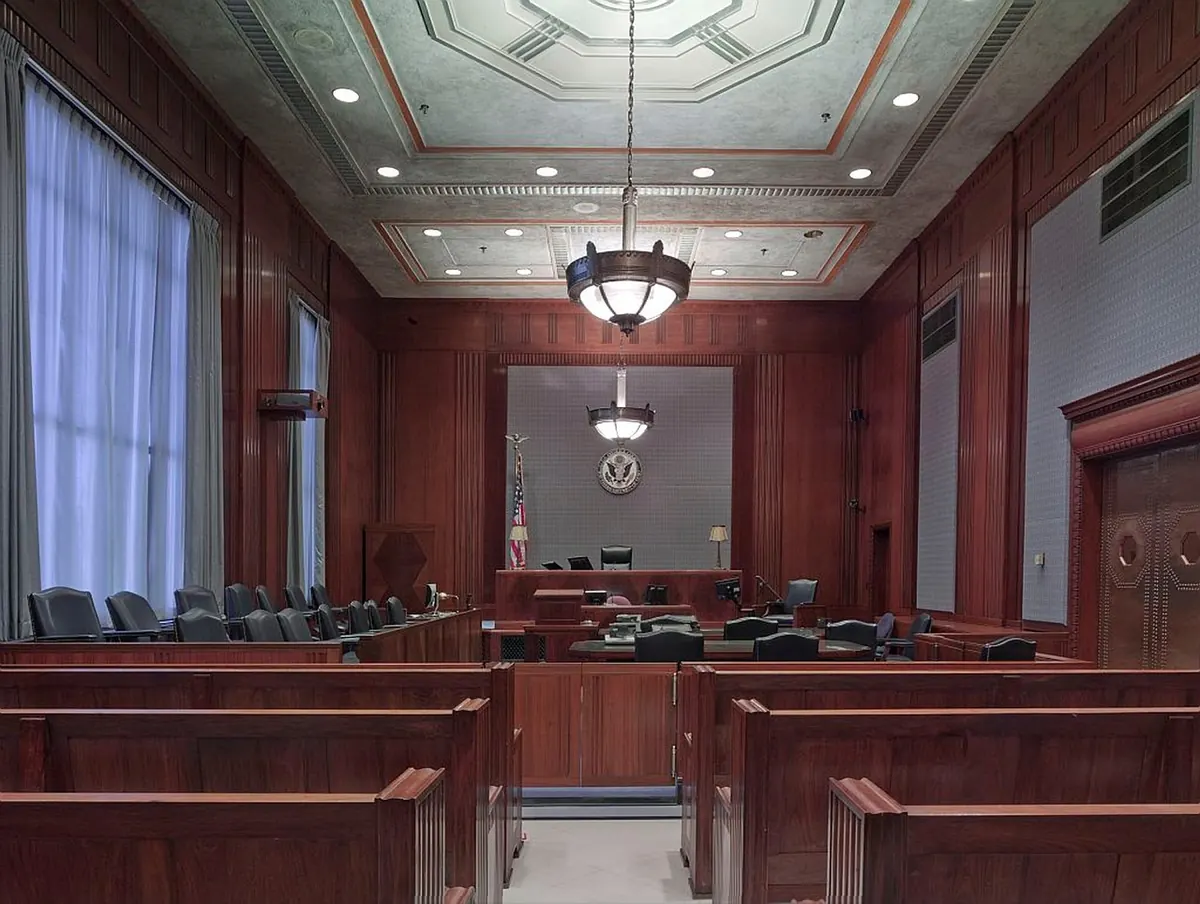
Photo: 12019 / Pixabay