
A charter skipper anchored off Road Town feels the chain drag across a coral head. A cruising yacht in the Turks and Caicos swings wider than expected and scours a patch of reef. Anchoring damage is usually accidental, and the instinct afterwards is to motor away and say nothing. That instinct is expensive. Across the UK Overseas Territories, reefs are protected by law, and how you handle the first day after contact often decides whether an incident is treated as a regrettable accident or a prosecution.
What follows is a working checklist: the evidence worth collecting, the duties that may fall on a skipper or owner, and the order in which to report. Legislation differs between territories and changes over time, so verify the detail with the relevant local authority and take advice from a lawyer qualified in that territory before you give any formal statement.
Know the rules before the anchor goes down
Most territories protect reefs through a mix of fisheries legislation, conservation statutes and marine park regulations. Those rules commonly do three things: prohibit anchoring in designated zones, restrict anchoring to sand or approved moorings, and make it an offence to damage coral — sometimes regardless of intent.
- Find out where the marine parks and no-anchor zones actually are, not just where the chart shows pale blue.
- Check whether your vessel needs a permit, and whether a mooring is compulsory in the area you plan to visit.
- Confirm whether anchoring is permitted for safety reasons only. Most regimes allow it when life or the vessel is at risk, but expect to justify that decision.
Ask the harbour master, the local parks body or a dive operator who works the site daily. They know which clear-looking patches are rubble and which are living reef.
Evidence that stands up later
Enforcement officers work from records. Vague recollections are worth little months later; a dated file is worth a great deal.
- Position and time. Photograph the chart plotter, note the coordinates and datum, and record when the anchor was set, when you noticed damage and when you recovered it.
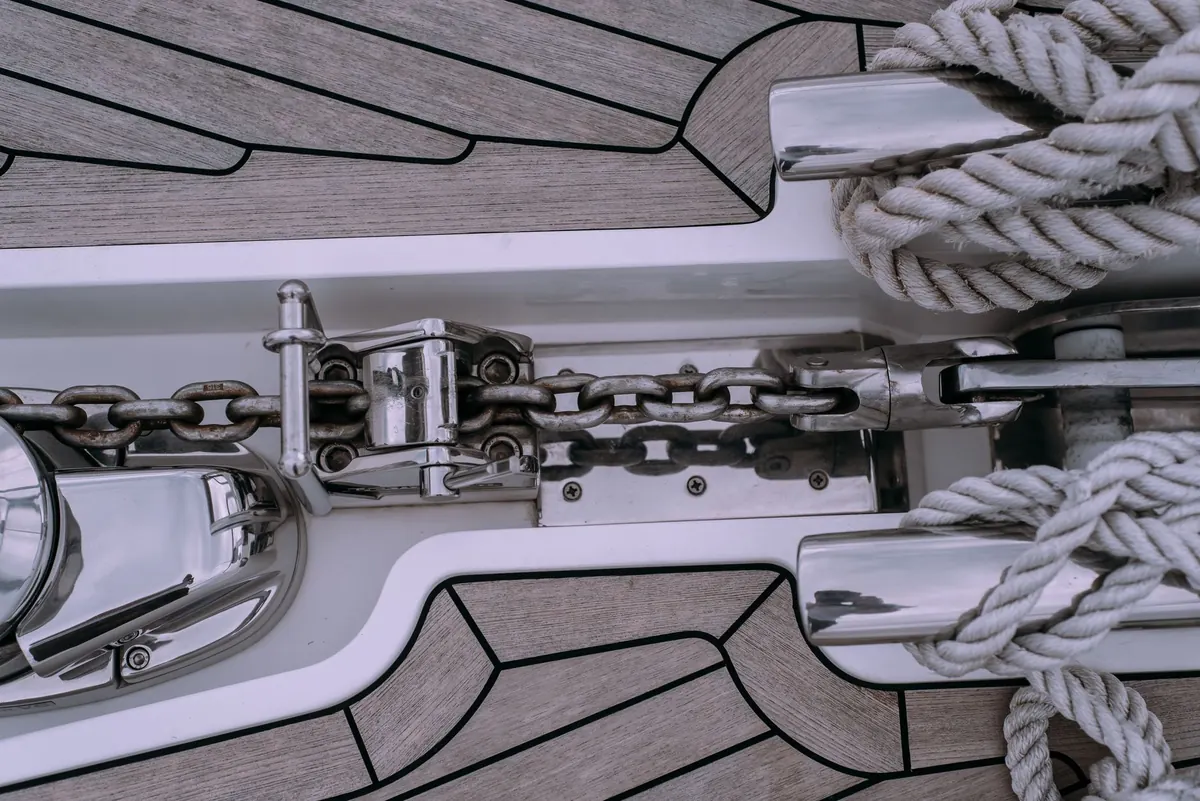
- Anchor geometry. Note how much chain or rode was out, the swing circle, and where the anchor itself came to rest.
- Images. Take wide shots for context and close-ups for detail, with something for scale. Keep the original files; do not crop, filter or edit them.
- People. Collect names, roles and contact details for everyone aboard, plus any witness ashore or on another vessel. Statements taken the same day carry more weight than ones produced weeks later.
- Vessel and insurance details. Name, registration, flag, length, draught, owner and insurer.
- Conditions. Weather, swell, tide and visibility, plus a short factual note on why you anchored where you did.
- A timeline. One page, in order, kept up to date.
Do not tidy up the site or prise coral off the anchor yourself. Recovery work needs specialists, and amateur intervention can worsen the damage and complicate your position.
The duties that attach to the vessel
Some territories impose a positive duty to report damage; others do not. Where a duty exists, it typically falls on the master and sometimes on the owner or charter company. Separately, permit conditions — marine park permits, charter licences, mooring agreements — may require you to notify the issuing authority.
Three duties apply almost everywhere:
- Notify your insurer promptly. Policies usually require notice within a set period and full co-operation with any survey.
- Notify the owner, manager or charter company if you are not one and the same.
- Preserve evidence. Moving the vessel, cleaning gear or deleting photographs undermines both your defence and the assessment of the reef.
Serious casualties involving UK-registered vessels may also fall to be reported to the Marine Accident Investigation Branch. If there is any prospect of a prosecution, instruct a local lawyer before making a formal statement.
How to report: a sequence that works
- Make the vessel and crew safe first. Nothing here outranks that.
- Record the position, time and circumstances, and take your photographs before anything changes.
- Telephone the relevant authority the same day — usually the territory's environment or fisheries department, or the body managing the marine park. Follow the call with an email so there is a written trail.
- Stick to what you observed. Set out facts: where, when, depth, seabed, what the chain did. Do not speculate about cause or accept blame in writing.
- Ask for a reference number and the officer's name.
- Tell your insurer, and the owner or manager where applicable, within the time their policy or contract requires.
- Co-operate with any reef assessment. You may be asked to contribute to the cost of an independent survey.
Who to contact
Start with whoever manages the marine area:
- The territory's environment or fisheries department — for example, the Department of Environment and Coastal Resources in the Turks and Caicos Islands, or the Department of Environment in the Cayman Islands.
- The parks or conservation trust that manages the site, such as the BVI National Parks Trust, if the damage is inside a
Photo: ROMAN ODINTSOV / Pexels